
How to Build a Self-Running Escape Room Team (So You Can Actually Go on Vacation)
Prefer reading? Honestly, sometimes I do too.
If you’d rather skim the key ideas than watch the full talk, here’s a written summary of the session below. 👇
TL;DW - Talk Summary
ER Champ is usually known as an enthusiasts event, thousands of teams worldwide battle through the digital qualifier, and the top 10 fly in for the live finals. In 2025, the final took place in Sofia, Bulgaria, in a room built specifically for the competition.
But this year they also added something new: a small owner-focused conference running alongside the competition). I was one of the speakers, and my topic was very simple:
How do you build a team that can run your escape room without you?
Because let’s be honest, too many of us don’t run businesses. We run dependencies. And the price we pay isn’t only time. It’s creativity, energy, relationships, and eventually, motivation.
So yes… today’s post is about going on vacation.
Not because “vacation” is the goal. But because if you can leave your venue for a week without it falling apart, it usually means your foundations are strong.

The first step: let go of your ego
Early on with clueQuest, I wanted to do everything myself. I was there constantly — at one point I even had a little corner set up to sleep in because commuting felt like an unnecessary interruption. I was handling:
That customer care email.
That photo on the website.
That room description.
That crack on the wall.
That puzzle reset that “only I can do properly.”
If you’ve ever built something from scratch, you know the feeling. The business is your baby, and it’s very easy to believe nobody will care about it quite as much as you do.
But here’s the hard truth:
You’re not supposed to do everything. And actually your team will do a better job in many cases too.
You’re supposed to surround yourself with people who are better than you, and then get out of their way.
One of my biggest breakthroughs came when I realised - about a decade ago - that I wasn’t a natural organiser. So I surrounded myself with people who were structured, disciplined, and calm under pressure, and I learned from them. Fast forward to today, and I’m organised enough to run Game On, my own escape room conference, largely on my own. That shift happened because I stopped trying to do everything and started learning from people who were better than me in the areas I lacked.
The reality check: owners are doing too many jobs
A few years ago, I asked a question in an owners group:
“How many roles do you personally cover in your business?”
Nearly 100 escape room owners responded, and the average was eight.
Eight roles. 🤯

I’ve surveyed the Escape Room Start Ups and Owners facebook group
There is no universe where you can do eight different jobs at a high level - consistently - and still have the headspace to grow the business. You can survive like that for a while (especially in the early hustle phase), but long-term it turns into chaos.
My rule of thumb:
At most, you should own 2–3 key areas.
Everything else must be delegated and distributed.

My “Circle of Trust” for delegation (that actually works)
Delegation fails for one main reason: owners delegate, then panic, then interfere.
So here’s the loop I use, one I’ve seen work repeatedly in my own escape room business and with the consulting clients I work with, when owners truly commit to it:
Delegate proactively
Don’t wait until you’re drowning. Go to your team and say, “I need help with this.”Structure the task properly
Give a brief, not a vibe. Guardrails matter. If someone is designing a brochure, don’t just say “make a brochure.” Tell them what it must include, who it’s for, what the goal is, what “good” looks like.Don’t interfere
This is the hardest part. Stop hovering. Let them solve it their way. It won’t look exactly like you would do it, and that’s fine.Let them make mistakes
People learn through failure. Your job is to be the safety net, not the puppeteer.Give feedback and repeat
One cycle builds confidence. Repeated cycles build competence. That’s how you turn “I can help sometimes” into “I own this now.”
The 7 building blocks of a self-running team
In the talk, I shared a structure I use with clients and internally. Think of it as a pyramid: you can’t “delegate the top” if the bottom is missing.
1) Running games (yes — but properly)
This is usually the first thing owners delegate (out of necessity). But most venues stop too early and wonder why standards slip.
To make game-running self-sustaining, you need:
A detailed GM manual (not just puzzle flow)
Clear team-type playbooks
Enthusiasts vs. birthday parties vs. multi-generational families need different briefings and different energy.Written standards for how your brand shows up
When I say “manual,” I don’t mean a few bullet points. I mean 20–40 pages of detailed guidance, flowcharts, and behind-the-scenes operations.
And that’s before you even get into policies.
2) Policies and processes (the boring stuff that saves your life)
If your team is more than ~10 people, you’re not managing “a small team” anymore, you’re managing a system.
You need policies for:
holidays
lateness and discipline (with escalation steps)
resets
complaints
refunds
handovers
emergency procedures
Without this, everything becomes personal. And personal is slow.
3) Performance management (yes, constantly)
If you want consistent delivery, you need consistent check-ins.
Examples:
timekeeping reviews every 6 months
reset quality checks
review mentions (by name)
photo quality (yes, even “stop taking ceiling-heavy photos” matters)
And one detail that changes everything:
perfect reset documentation.
Down to the centimeter. If the product is the room, then the reset is production control.
And yes, this is where a small, well-trained part of my former control-freak energy still lives. 😅 But now it’s channelled into systems and documentation, not hovering over people. There’s a difference.
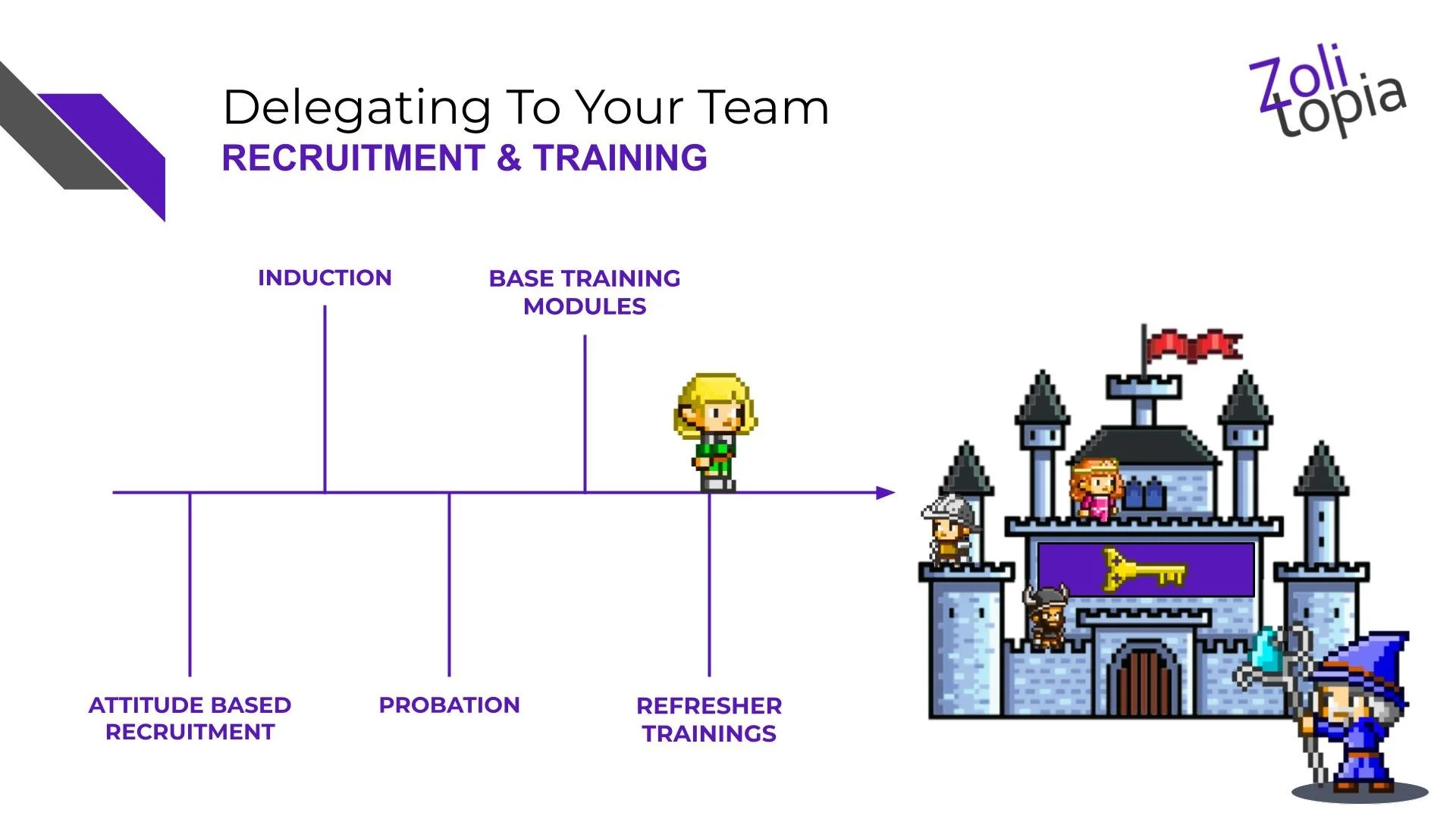
4) Recruitment and training (delegate this after the foundations)
Most owners train because they have to. But ideally, you should be able to delegate training too — once the system exists.
My recommendation is attitude-based recruitment:
Skills can be taught
Attitude can’t
Use observation and checklists:
Are they helpful? Are they self-aware? Do they communicate well? Do they step back when needed?
Then structure the journey:
induction
probation (with monthly check-ins)
pass/fail (be brave)
refresher training (because standards always drift)
5) Customer care (the biggest silent time-suck)
I meet owners who still take calls at 9pm… while they have staff on shift.
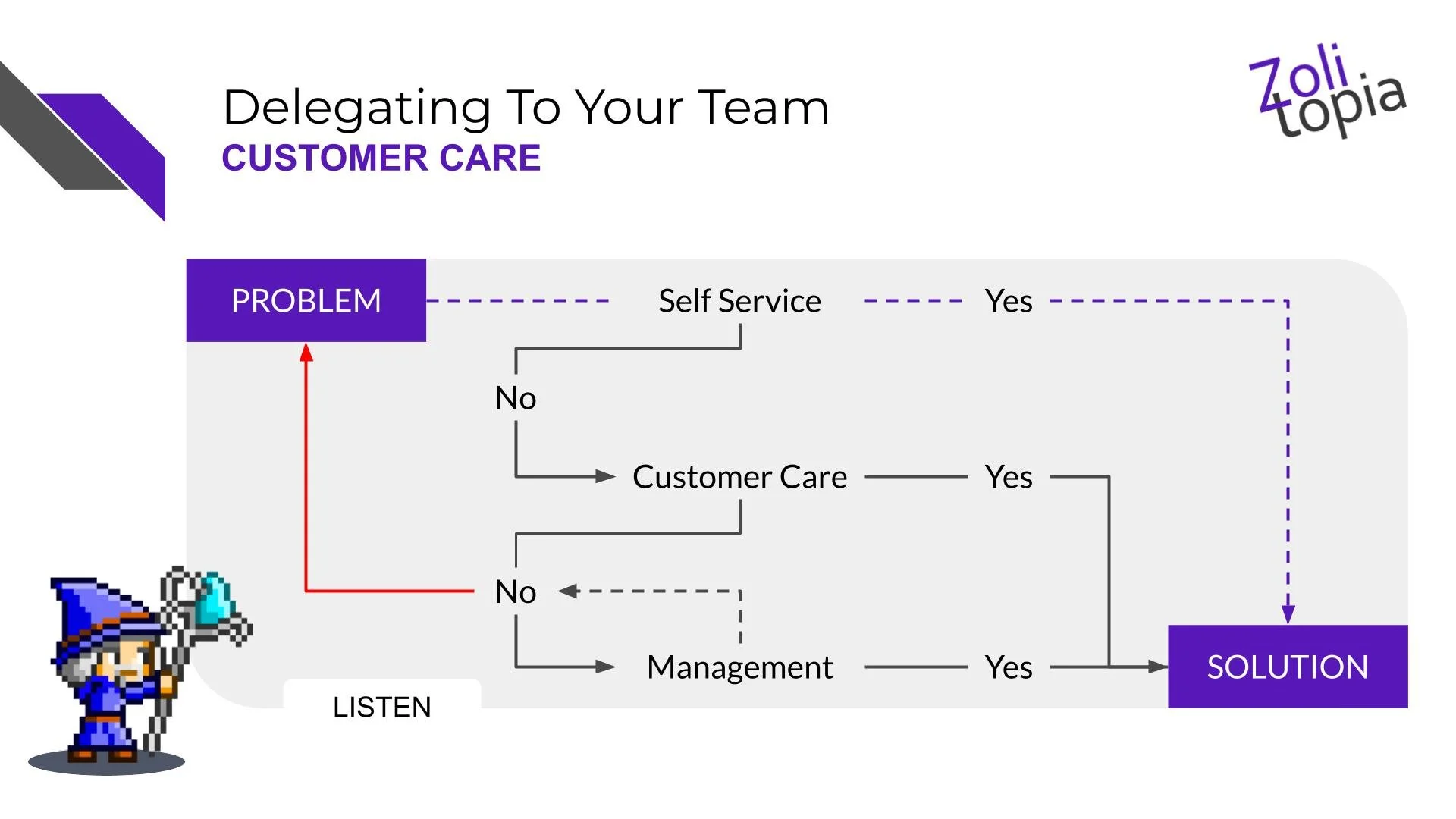
Customer care becomes scalable when you do three things:
Preemptive answers
Your website, FAQs, and confirmation emails should solve most questions before they’re asked.Canned responses
Templates for recurring questions. Your team should not be writing every email from scratch.Autonomy and authorization
Staff need permission to solve problems.
That includes handling minor compensation, confirming refunds (even if you process later), and resolving complaints before they ever reach you.
In my own operation, most complaints never reach ownership, because the team is trained and empowered to fix issues on the spot, then report it up so we can prevent it from happening again.
6) Maintenance (or: how to stop losing two days to “one small fix”)
Maintenance becomes manageable with:
troubleshooting manuals
a system for staff to flag issues early
preemptive maintenance (shut rooms proactively every 6–12 months)
a backup plan (neighbor venue, nearby restaurant, alternative activity)
Most importantly: your staff need to know the backup plan, so you’re not the one dealing with it.
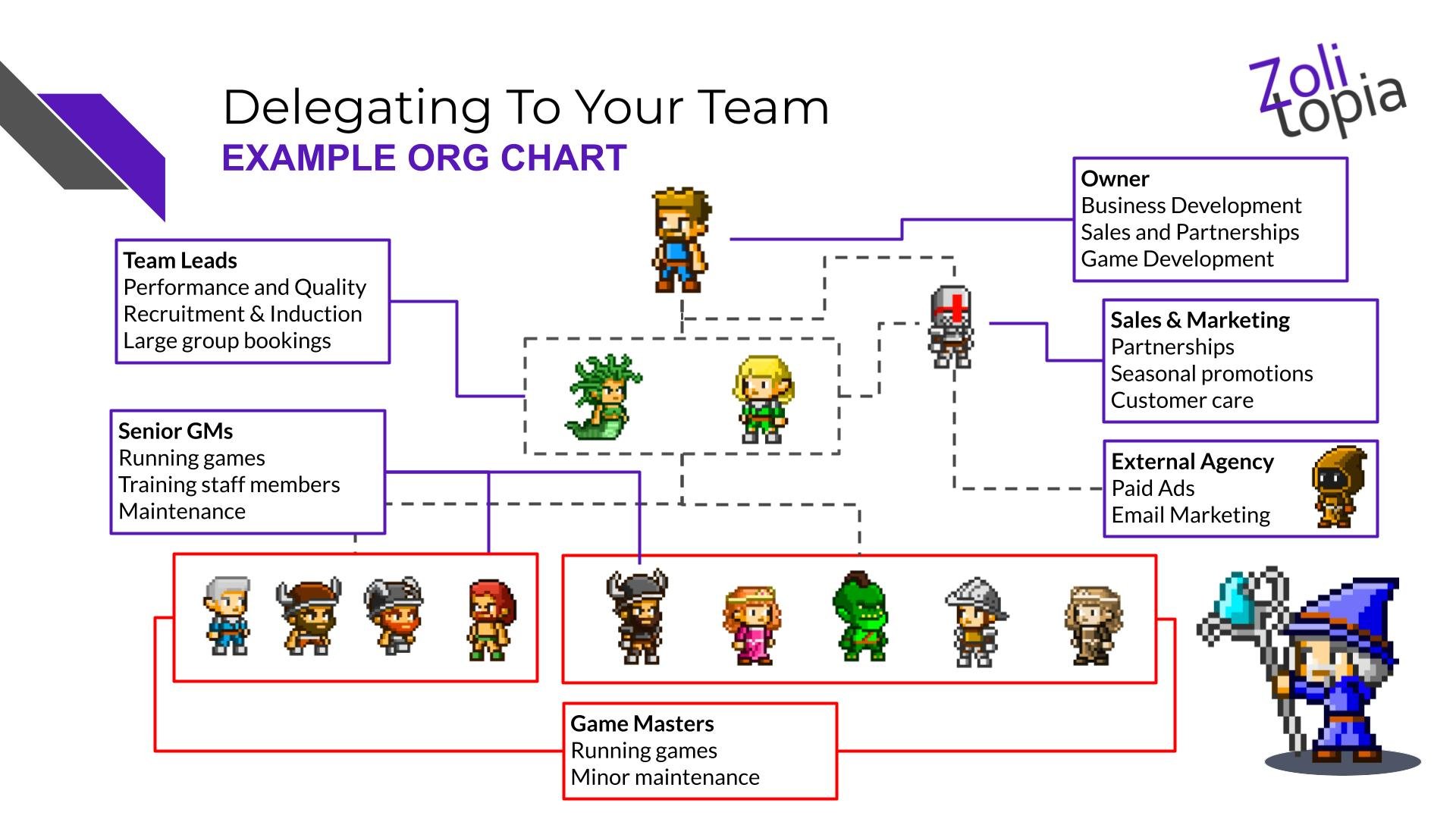
7) Layers of responsibility (career paths, not “just GMs”)
If you want a self-running team, you need roles.
Even in smaller operations, you can create “badges” (responsibilities that can be added or removed):
customer care rep (10 hours/week)
senior GM
assistant manager
quality checker
training lead
etc.
This does two things:
It takes weight off you
It creates progression, which improves retention and performance
Because if we’re honest: giving the same clues hundreds of times isn’t fulfilling forever. But building skills, owning responsibilities, and progressing? That’s a career path, and careers create stability.

When the foundation is strong, you get your life back
The punchline of the talk wasn’t “work less.”
It was this:
Once the basics are right, you get to choose your role.
Want to be an artist and focus on building worlds?
Want to be a performer and act in your own games?
Want to be the growth person, partnerships, sales, big collaborations?
Want to leave the business entirely for a while and build something new?
You can only pick that future when the foundations are solid.
And yes, it also means you can go on vacation without your business texting you every two hours.
Which, frankly, is a pretty good milestone to aim for.
If you want to pressure-test whether your venue is “vacation-ready,” here’s the simplest diagnostic I know:
If you disappeared for 7 days, what would break first, and who would fix it?
That answer tells you exactly what to build next.
Don’t Build It Alone
If you’re reading this thinking, “This makes sense… but where do I even start?” - you don’t have to figure it out on your own.
Building a self-running team isn’t about working harder. It’s about putting the right structure in place, in the right order. And sometimes it helps to have someone who’s already done it guide you through that process.
That’s exactly what I do through Zolitopia, helping escape room owners build stronger teams and more sustainable businesses.
If that sounds like your next step, reach out and let’s have a chat.