The Future of Escape Rooms – 2026 Edition: Roundtable Key Takeaways
Every time I run one of these roundtables, I’m reminded of two things:
We’re all operating in wildly different markets.
We’re still fighting many of the same battles.
This session was built around three topics - state of the industry, innovating the business model, and revenue beyond the room - and the thread running through all of it was pretty clear:
Escape rooms aren’t “the pie” anymore - we’re fighting for our share of a much bigger pie.
(If you want a useful comparison point, I unpacked where we were a year ago in The Future of Escape Rooms 2025 – Roundtable Discussion Key Takeaways. It’s interesting to see how quickly the tone has shifted.)
Introductions: The Industry Is More Fragmented Than Ever
I always start these sessions with introductions - not because I’m trying to be formal, but because context matters and it tells you very quickly what phase people are in:
Expanding
Stabilising
Pivoting
Or quietly preparing an exit
This time, we had a real mix. Long-running venue owners. Multi-site operators. New entrants. Corporate-first businesses. Mobile-only operators. Fully online escape experiences.
Lorna’s story from Beyond Breakout stood out. They closed their physical venue and went fully mobile about a year ago, and she described it as the best decision they’ve made. Lower costs. More reach. Better lifestyle.
That’s not just an anecdote. It’s a signal.
We’re no longer looking at a single dominant model. We’re looking at operators finding the model that fits their market and their lives.
And if you zoom out, that’s very much in line with what I’ve written before in The Game Is On – Playing the Long Term Game. The people thinking long-term aren’t just asking “How do I fill next weekend?” - they’re asking, “What does my business look like in five years?”
State of the Industry: Consolidation Is Real
I shared Escape the Review’s UK data showing net decline, more venues closing than opening. According to the Room Escape Artis yearly report, the US appears steadier on paper, but this years data included adjacent concepts like challenge rooms.

Data supplied by Escape the Review
What I’m seeing on the ground:
Franchises expanding
Independents struggling more
Fewer owners holding more venues
That doesn’t mean the industry is collapsing. It means it’s maturing.
And the biggest shift?
We used to be the immersive experience in town. Now we’re competing with immersive darts, mini golf, challenge arcades, VR arenas, game shows, and food-and-drink driven activity venues.
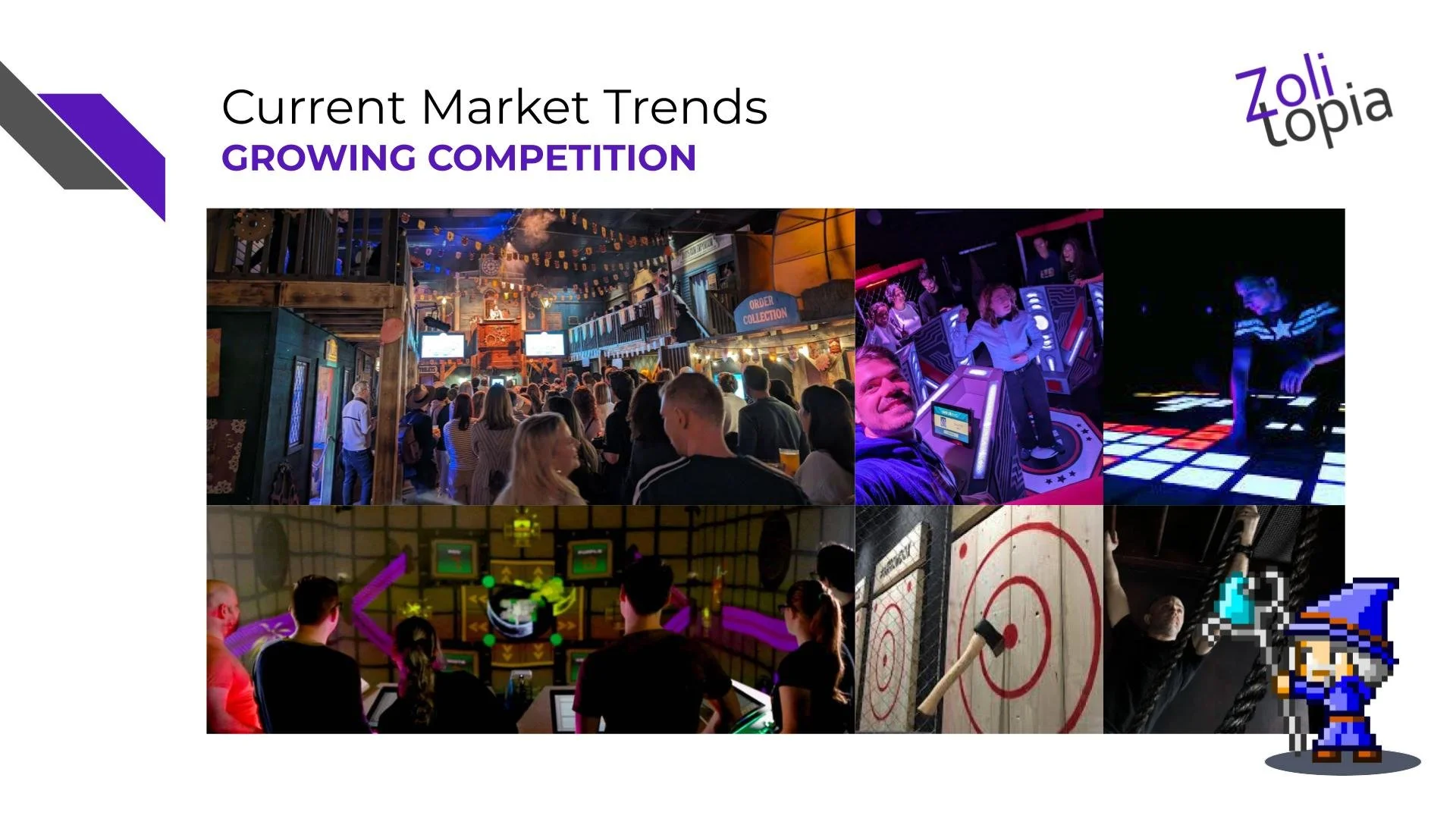
Brenda from Reality Break shared something that landed heavily: they’re closing their brick-and-mortar space, and one of the most common reasons they hear is simple, customers want food, drink, and activity in one place.
Convenience is king.
That ties directly into something we discussed in Networking and Partnerships – Roundtable Discussion // Takeaways: if you can’t provide everything in-house, partnerships and positioning become critical.
The silver lining? Reality Break isn’t exiting the industry—they’re pivoting into corporate-only, partnering with executive coaches, and running events for up to 500 players.
That’s not failure. That’s evolution.
Innovating the Business Model: Make It Talkable Again
We had a healthy tension in this section.
One camp argues we must constantly innovate and deliver “wow” moments to survive.
Another camp (quite rightly) says escape rooms don’t have to be spectacle-driven to succeed, many classic formats still book out just fine. In fact, our original room (launched in 2013 and facelifted several times since) still performs as well as our newer rooms.
We’re in London, though, our market allows for a longer shelf life. And that’s exactly why context matters.
Both sides are true.
But here’s my concern: escape rooms have become familiar. Familiar doesn’t mean bad, but it does mean we don’t automatically get word-of-mouth like we did in the 2010’s.
Michael described gameplay becoming predictable after 5–10 rooms. And if surprise was part of the original magic, we need to fight to keep that element alive.
That doesn’t mean you need a €1 million set.

It might mean:
Paid side quests inside existing rooms (Like Mystic Wands inside a Harry Potter game in Sofia)
Pipeline formats for higher throughput (a lot of top TERPECA games)
Multi-use spaces (meeting room by weekday, game room by weekend) like clueQuest’s IAMAI room
Short-term rethemes and pop-ups
Seasonal overlays
On the quality debate, Phil from Pier Pressure shared something important. He used to believe spending £40k vs £80k wouldn’t change revenue much. He’s now done a full U-turn. Their top-ranked game still outperforms others by 50% annually.
The takeaway isn’t “chase awards.” It’s this:
A truly exceptional experience creates local gravity.
And gravity builds long-term returns.
Of course, none of that matters if people can’t see or understand your experience in the first place. If your marketing still hides what makes your game special, start with Why You Need Photos of Your Escape Room.
Revenue Beyond the Room: The Petal Model
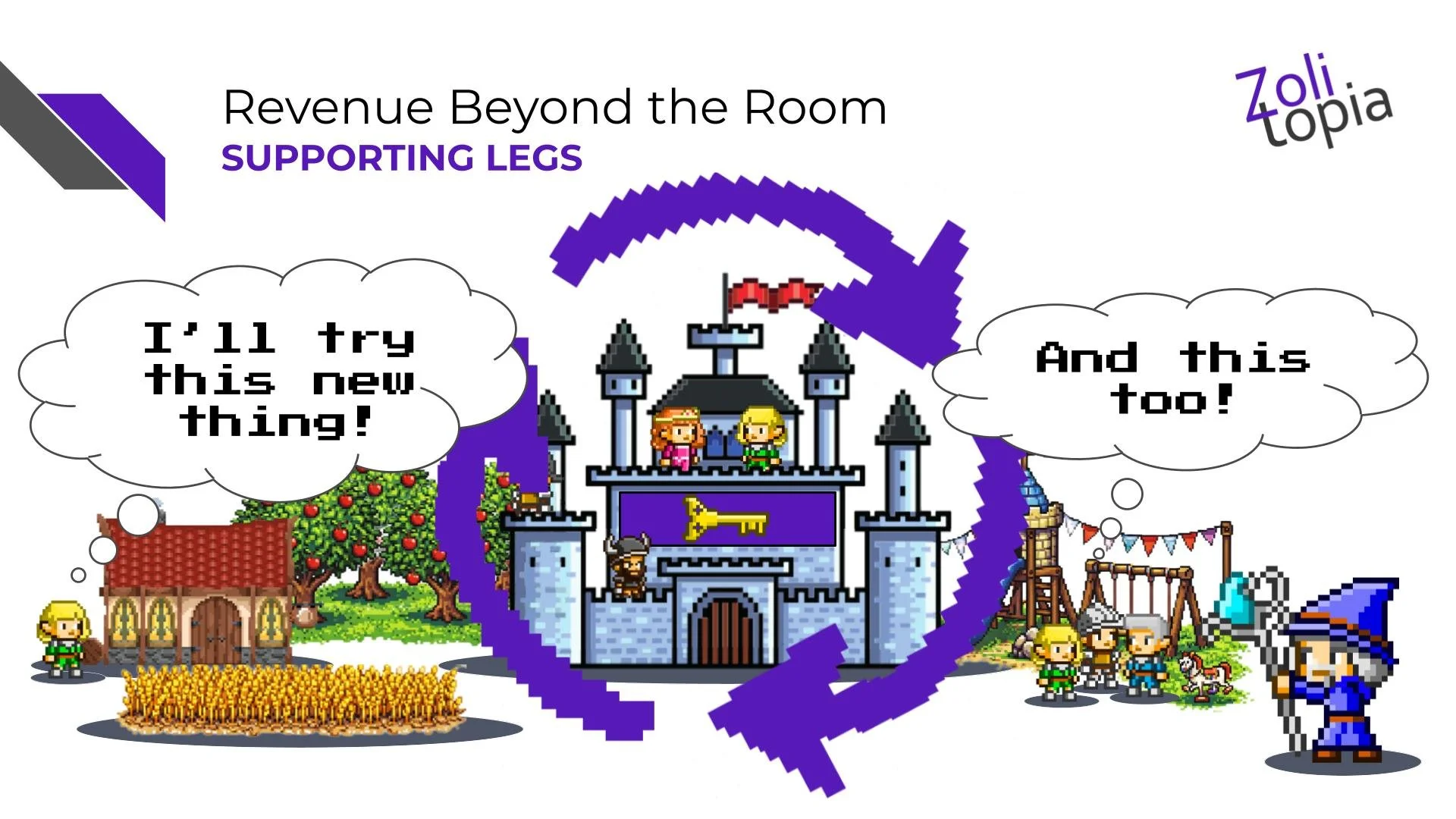
Phil described his business as a flower.
The escape room is the centre.
Profitability comes from the petals: Murder mysteries. Live traitor games. A workshop building rooms for others. A bar. Seasonal crossovers. Pop-ups. Franchise activity.
Each petal alone? Not life-changing.
Together? The difference between break-even and strong profit.
That aligns perfectly with what we explored in Additional Revenue Streams – Roundtable Discussion // Takeaways. Diversification isn’t a bonus anymore, it’s stability.
And seasonality is more intense than it used to be.
Bookings are clustering more heavily around weekends, weather increasingly influences last-minute decisions, booking windows are shortening, and operational costs continue to rise. When your business relies on a single product, you feel every one of those fluctuations.
We heard great examples:
School partnerships filling weekday mornings
Mobile, education-first models outperforming physical venues in certain markets
Outdoor games, museum and castle gamification projects — often powered by platforms like Questy — generating entirely new audiences
Online platforms scaling to 10,000-player corporate events
Game shows attracting demographics that might never book a classic escape room
Corporate did come up repeatedly as a reliable pillar — if you treat it seriously and build for it properly. But the bigger theme wasn’t “go corporate.” It was this: diversify. Diversify your product portfolio, diversify your marketing approach, and diversify the types of customers you serve. The more legs your business stands on, the less fragile it becomes.
And that’s where operations matter.
As Brenda pointed out during the discussion, responsiveness, SLAs, templates, and professionalism often win the deal, not just the activity itself. If you want to strengthen that side of your operation, read my blog about ‘How to build a self running escape room team’
Seasonal Content Is Underrated
Christmas came up repeatedly — and for good reason.
Every time someone “Christmasifies” an existing room, revenue spikes. But it’s not just Christmas. Easter and Halloween lend themselves perfectly to themed overlays and targeted upsells around specific rooms. These seasonal tweaks don’t require a full rebuild, just smart dressing, adjusted marketing, and a compelling reason to return.

I’ve seen this work consistently in our own business, and clients who’ve implemented seasonal overlays regularly report noticeable peaks around these periods.
It’s one of the simplest, highest-ROI innovations available.
If you want a deeper dive into how to execute that properly, both Christmas Marketing – Roundtable Discussion // Takeaways and Why and How to Start with Your Christmas Marketing break it down step by step.
Seasonal products are one of the easiest ways to increase customer touchpoints per year without building a brand-new room.
And that’s important.
Because here’s another shift, we can’t be a once-a-year visit anymore. We need customers interacting with our brand two, three, four times a year.
2010s Tactics Won’t Carry Us Through 2026
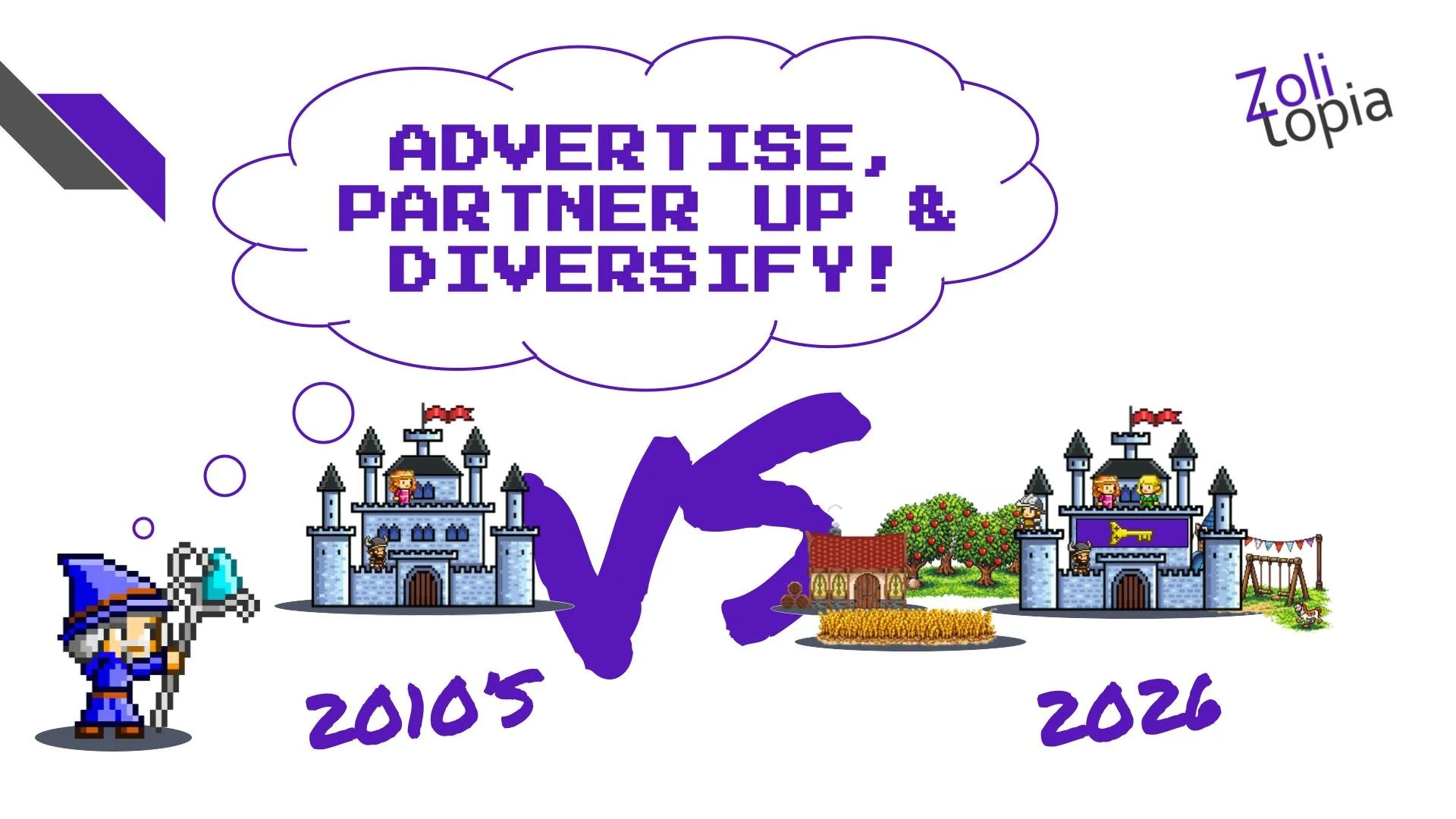
In the 2010s, having an escape room was enough.
You were the new thing in town.
Now?
You need:
Smarter marketing
Paid acquisition when needed
Partnerships
Corporate positioning
Seasonal product thinking
Multiple revenue legs
But “smarter marketing” isn’t just posting more on social media. It’s performance-driven campaigns, proper PPC management, websites that actually convert, and email marketing that re-engages past players. That’s exactly why I partnered with a childhood friend - a PPC specialist - and we launched beboldR together. Many of my Zolitopia clients were asking for hands-on support with Google Ads, Meta Ads, website builds and facelifts, and newsletters, so it made sense to join forces and offer a more rounded solution.
Before you increase ad spend, though, make sure your fundamentals aren’t leaking conversions. If you haven’t revisited it recently, 5 Website Mistakes to Avoid is still painfully relevant.
And beyond tactics, you need direction. Reacting month to month isn’t enough anymore. You need a clear plan for where your business is heading over the next three to five years. That’s the focus of my consulting work, helping owners build sustainable structures and future-proof their operations instead of constantly firefighting the present.
So if you take one thing from this roundtable, take this:
Diversify like it’s your job — because it is.
And at the same time, keep pushing the core experience forward so people start talking about escape rooms the way they used to.
Not because we’re nostalgic.
But because word-of-mouth is still the most powerful marketing tool we have.
We just have to earn it again.
One Final Thought (That Wasn’t in the Roundtable)
This wasn’t part of the original discussion, but re-reading the transcript made me think about something important.
Is this market here to stay?
Yes.
Escape rooms have been around for more than 15 years. That’s not a trend anymore, that’s an established sector. The format may evolve. The expectations will rise. The business models will shift. But the core human desire to solve problems together, to feel immersed in a story, to escape reality for an hour, that isn’t going anywhere.
Is it still a good time to start?
Yes, if you’re here to create something spectacular. If you’re motivated to entertain people, to build something memorable, to push the format forward. There will always be a market for well-executed experiences.
Will the market change? Absolutely. And that’s a good thing.
We’ve gained 15 years of collective expertise. We understand operations better. We understand marketing better. We understand player psychology better. The opportunity now isn’t to replicate what worked in 2016. It’s to use everything we’ve learned to build what works in 2026 and beyond.
The base concepts will evolve.
The bar will rise.
And the operators who lean into that - rather than resist it - will do just fine.